COVID-19: Tolong duduk diam dalam rumah - PM

KUALA LUMPUR: 

Just stay at home. Demikian nasihat, Perdana Menteri, Tan Sri Muhyiddin Yassin yang meminta rakyat Malaysia untuk berada di rumah dan meluangkan masa bersama anak, isteri dan ahli keluarga.


"Tidak perlu keluar ke mana-mana, dengan cara ini anda terhindar daripada jangkitan COVID 19 dan penularan wabak ini InsyAllah dapat dibendung.
"Inilah tujuan sebenar Perintah Kawalan Pergerakan yang dilaksanakan kerajaan. Bukan untuk membolehkan anda balik ke kampung, penuhi jemputan kenduri, beli belah di pasar raya, bersiar di taman atau bercuti di tempat peranginan.
"Tujuan (Perintah Kawalan Pergerakan) ialah supaya anda duduk di rumah.
“Stay at home and protect yourself dan your family (Duduk di rumah dan lindungi diri anda dan keluarga)," katanya dalam perutusan khas yang disiarkan secara langsung di stesen televisyen di sini, hari ini.


Perhimpunan Bulan Februari 2020 IAB
Pusat Konsultasi dan Pembangunan Organisasi Pendidikan

Khalifah

Ayat-Ayat Tentang Kepemimpinan
Penulis: Imam Bukhari [27/3/2013]

Ayat-Ayat Tentang Kepemimpinan

Imam Bukhari


Pemimpin dan kepemimpinan merupakan persoalan keseharian dalam kehidupan bermasyarakat, berorganisasi/ berusaha, berbangsa dan bernegara. Kemajuan dan kemunduran masyarakat, organisasi, usaha, bangsa dan megara antara lain dipengaruhi oleh para pemimpinnya. Oleh karena itu sejumlah teori tentang pemimpin dan kepemimpinan pun bermunculan dan kian berkembang.

Islam sebagai rahmat bagi seluruh manusia, telah meletakkan persoalan pemimpin dan kepemimpinan sebagai salah satu persoalan pokok dalam ajarannya.

Beberapa pedoman atau panduan telah digariskan untuk melahirkan kepemimpinan yang diredhai Allah SWT, yang membawa kemaslahatan, menyelamatkan manusia di dunia dan akhirat kelak.

Sejarah Islam telah membuktikan pentingnya masalah kepemimpinan ini setelah wafatnya Baginda Rasul. Para sahabat telah memberi penekanan dan keutamaan dalam melantik pengganti beliau dalam memimpin umat Islam. Umat Islam tidak seharusnya dibiarkan tanpa pemimpin. Sayyidina Umar R.A pernah berkata, “Tiada Islam tanpa jamaah, tiada jamaah tanpa kepemimpinan dan tiada kepemimpinan tanpa taat”.

Allah SWT telah memberi tahu kepada manusia, tentang pentingnya kepemimpinan dalam islam, sebagaimana dalam Al-Quran kita menemukan banyak ayat yang berkaitan dengan masalah kepemimpinan.


 وَإِذْ قَالَ رَبُّكَ لِلْمَلَائِكَةِ إِنِّي جَاعِلٌ فِي الأَرْضِ خَلِيفَةً قَالُوا أَتَجْعَلُ فِيهَا مَنْ يُفْسِدُ فِيهَا وَيَسْفِكُ الدِّمَاءَ وَنَحْنُ نُسَبِّحُ بِحَمْدِكَ وَنُقَدِّسُ لَكَ قَالَ إِنِّي أَعْلَمُ مَا لاَ تَعْلَمُونَ (البقرة:30

“Ingatlah ketika Tuhanmu berfirman kepada para malaikat: “Sesungguhnya Aku hendak menjadikan seorang khalifah di muka bumi”. Mereka berkata: “Mengapa Engkau hendak menjadikan (khalifah) di bumi itu orang yang akan membuat kerusakan padanya dan menumpahkan darah, padahal kami senantiasa bertasbih dengan memuji Engkau dan mensucikan Engkau?” Tuhan berfirman: “Sesungguhnya Aku mengetahui apa yang tidak kamu ketahui.” (Al Baqarah: 30).

Ayat ini mengisyaratkan bahwa khalifah (pemimpin) adalah pemegang mandat Allah SWT untuk mengembang amanah dan kepemimpinan di muka bumi. 


يَاأَيُّهَا الَّذِينَ ءَامَنُوا أَطِيعُوا اللَّهَ وَأَطِيعُوا الرَّسُولَ وَأُولِي الأَمْرِ مِنْكُمْ فَإِنْ تَنَازَعْتُمْ فِي شَيْءٍ فَرُدُّوهُ إِلَى اللَّهِ وَالرَّسُولِ إِنْ كُنْتُمْ تُؤْمِنُونَ بِاللَّهِ وَالْيَوْمِ الآخِرِ ذَلِكَ خَيْرٌ وَأَحْسَنُ تَأْوِيلاًً (النساء:59

"Hai orang-orang yang beriman, taatilah Allah SWT dan taatilah Rasul (Nya), dan ulil amri di antara kamu. Kemudian jika kamu berlainan pendapat tentang sesuatu, maka kembalikanlah ia kepada Allah SWT (Al Qur’an) dan Rasul (sunnahnya), jika kamu benar-benar beriman kepada Allah SWT dan hari kemudian. Yang demikian itu lebih utama (bagimu) dan lebih baik akibatnya.” (QS An-Nisa: 59).

Ayat ini menunjukan ketaatan kepada ulil amri (pemimpin) harus dalam rangka ketaatan kepada Allah SWT dan rasulnya.

Yahya (2004:14) mengkaji ayat ini dengan berpendapat bahwa Kata “al-amr” dalam ayat itu artinya: urusan, persoalan, masalah, perintah. Pemimpin merupakan cermin masyarakat yang dipimpinnya serta ia selalu dekat dan bersama dengan masyarakatnya dalam suka mahupun duka.


يَادَاوُدُ إِنَّا جَعَلْنَاكَ خَلِيفَةً فِي الْأَرْضِ فَاحْكُمْ بَيْنَ النَّاسِ بِالْحَقِّ وَلا تَتَّبِعِ الْهَوَى فَيُضِلَّكَ عَنْ سَبِيلِ اللَّهِ إِنَّ الَّذِينَ يَضِلُّونَ عَنْ سَبِيلِ اللَّهِ لَهُمْ عَذَابٌ شَدِيدٌ بِمَا نَسُوا يَوْمَ الْحِسَابِ (ص:26

”Hai Daud, sesungguhnya Kami menjadikan kamu khalifah (penguasa) di muka bumi, maka berilah keputusan (perkara) di antara manusia dengan adil dan janganlah kamu mengikuti hawa nafsu, karena ia akan menyesatkan kamu dari jalan Allah SWT. Sesungguhnya orang-orang yang sesat dari jalan Allah SWT akan mendapat azab yang berat, karena mereka melupakan hari perhitungan.” (Qs Shad: 26).

Ayat ini mengisyaratkan bahwa: salah satu tugas dan kewajiban utama seorang khalifah adalah menegakkan hukum secara Al-Haq. Seorang pemimpin tidak boleh menjalankan kepemimpinannya dengan mengikuti hawa nafsu. Karena tugas kepemimpinan adalah tugas fi sabilillah dan kedudukannya sangat mulia.

Digital Leadership


Leadership Theories


Theories are commonly categorized by which aspect is believed to define the leader the most. The most widespread one's are: Great Man TheoryTrait TheoryBehavioural TheoriesContingency TheoriesTransactional Theories and Transformational Theories.


Great Man Theory (1840s)

The
The Great Man theory evolved around the mid 19th century. Even though no one was able to identify with any scientific certainty, which human characteristic or combination of, were responsible for identifying great leaders. Everyone recognized that just as the name suggests; only a man could have the characteristic (s) of a great leader.
The Great Man theory assumes that the traits of leadership are intrinsic. That simply means that great leaders are born...
On Heroes, Hero-Worship, and the Heroic in History
they are not made. This theory sees great leaders as those who are destined by birth to become a leader. Furthermore, the belief was that great leaders will rise when confronted with the appropriate situation. The theory was popularized by Thomas Carlyle, a writer and teacher. Just like him, the Great Man theory was inspired by the study of influential heroes. In his book "On Heroes, Hero-Worship, and the Heroic in History", he compared a wide array of heroes.
In 1860, Herbert Spencer, an English philosopher disputed the great man theory by affirming that these heroes are simply the product of their times and their actions the results of social conditions.

Trait Theory (1930's - 1940's)

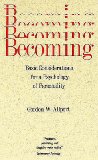
The trait leadership theory believes that people are either born or are made with certain qualities that will make them excel in leadership roles. That is, certain qualities such as intelligence, sense of responsibility, creativity and other values puts anyone in the shoes of a good leader. In fact, Gordon Allport, an American psychologist,"...identified almost 18,000 English personality-relevant terms" (Matthews, Deary & Whiteman, 2003, p. 3).
The trait theory of leadership focused on analyzing mental, physical and social characteristic in order to gain more understanding of what is the characteristic or the combination of characteristics that are common among leaders.
There were many shortfalls with the trait leadership theory. However, from a psychology of personalities approach, Gordon Allport's studies are among the first ones and have brought, for the study of leadership, the behavioural approach.
http://www.amazon.com/gp/product/0300000022?ie=UTF8&tag=leadershipcen-Becoming: Basic Considerations for a Psychology of Personality (The Terry Lectures Series)
  • In the 1930s the field of Psychometrics was in its early years.
  • Personality traits measurement weren't reliable across studies.
  • Study samples were of low level managers
  • Explanations weren't offered as to the relation between each characteristic and its impact on leadership.
  • The context of the leader wasn't considered.
Many studies have analyzed the traits among existing leaders in the hope of uncovering those responsible for ones leadership abilities! In vain, the only characteristics that were identified among these individuals were those that were slightly taller and slightly more intelligent!

Behavioural Theories (1940's - 1950's)

In reaction to the trait leadership theory, the behavioural theories are offering a new perspective, one that focuses on the behaviours of the leaders as opposed to their mental, physical or social characteristics. Thus, with the evolutions in psychometrics, notably the factor analysis, researchers were able to measure the cause an effects relationship of specific human behaviours from leaders. From this point forward anyone with the right conditioning could have access to the once before elite club of naturally gifted leaders. In other words, leaders are made not born.
The behavioural theories first divided leaders in two categories. Those that were concerned with the tasks and those concerned with the people. Throughout the literature these are referred to as different names, but the essence are identical.

Associated Theories


Contingency Theories (1960's)

The Contingency Leadership theory argues that there is no single way of leading and that every leadership style should be based on certain situations, which signifies that there are certain people who perform at the maximum level in certain places; but at minimal performance when taken out of their element.
To a certain extent contingency leadership theories are an extension of the trait theory, in the sense that human traits are related to the situation in which the leaders exercise their leadership. It is generally accepted within the contingency theories that leader are more likely to express their leadership when they feel that their followers will be responsive.

Associated Theories


Transactional leadership Theories (1970's)

Transactional theories, also known as exchange theories of leadership, are characterized by a transaction made between the leader and the followers. In fact, the theory values a positive and mutually beneficial relationship.
Transactional Leadership
For the transactional theories to be effective and as a result have motivational value, the leader must find a means to align to adequately reward (or punish) his follower, for performing leader-assigned task. In other words, transactional leaders are most efficient when they develop a mutual reinforcing environment, for which the individual and the organizational goals are in sync.
The transactional theorists state that humans in general are seeking to maximize pleasurable experiences and to diminish un-pleasurable experiences. Thus, we are more likely to associate ourselves with individuals that add to our strengths.

Associated Theories


Transformational Leadership Theories (1970s)

Transformational Theories
The Transformational Leadership theory states that this process is by which a person interacts with others and is able to create a solid relationship that results in a high percentage of trust, that will later result in an increase of motivation, both intrinsic and extrinsic, in both leaders and followers.
The essence of transformational theories is that leaders transform their followers through their inspirational nature and charismatic personalities. Rules and regulations are flexible, guided by group norms. These attributes provide a sense of belonging for the followers as they can easily identify with the leader and its purpose.


LinkWithin

Related Posts Plugin for WordPress, Blogger...

Popular Posts

Surely silence can sometimes be the most eloquent reply.